Food systems are central to tackling climate change, hunger, and sustainable livelihoods. Yet they also drive global greenhouse gas emissions, biodiversity loss, and ill-health.
Digital agriculture is increasingly promoted as a solution to these challenges, offering tools to collect and analyse data on everything from soil health to market trends, with the potential to improve efficiency and sustainability. But these same technologies have significant risks. They can widen inequalities, concentrate control over data, erode traditional knowledge, and undermine farmer autonomy.
How can we ensure that digital technologies support equitable and sustainable food system transformation?
The problem:
The promises and risks of digital food systems
Why focus on agricultural data?
While there are many different types of digital technologies being developed for agriculture—from mobile phone applications to remote sensing technologies to new forms of biotechnology—what unites these different technologies is their reliance on data. These technologies depend on the collection and processing of vast amounts of data. This includes data about plant genetic resources, crop and livestock production, land ownership and use, soil and pest conditions, and farmer finances.
As such data is increasingly collected by the private sector, the value of data is changing. Once an informational resource gathered by governments for public benefit and planning, data is now a commercial asset and a significant source of political and market power.
Today, there are no shared rules about who owns agricultural data, who can use it, and who benefits from it. Current laws and institutions are fragmented and weak. Better data governance could fix this, by setting clear rules that protect the autonomy of small-scale food producers and prevent data from being used to surveil and exploit farmers. What is at stake is the future of digital agriculture, which can develop in two very different directions: one driven by extraction, the other by equity.
The extractive approach
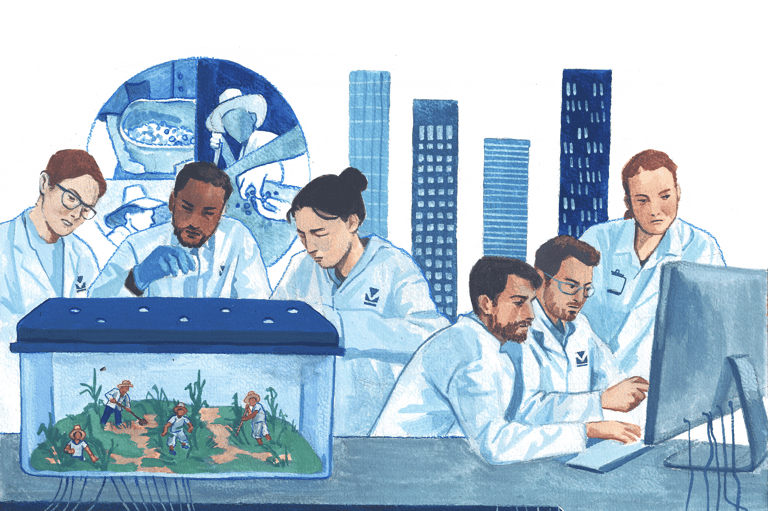
In an extractive model, data flows upward. It is collected from farmers, analysed by external parties, and turned into products and insights that are sold back to them. In this model, farmers have little say over what is collected or how it is used. Their knowledge is absorbed into digital systems controlled by others, eroding their autonomy and making them dependent on external tools and expertise.
The alternative approach
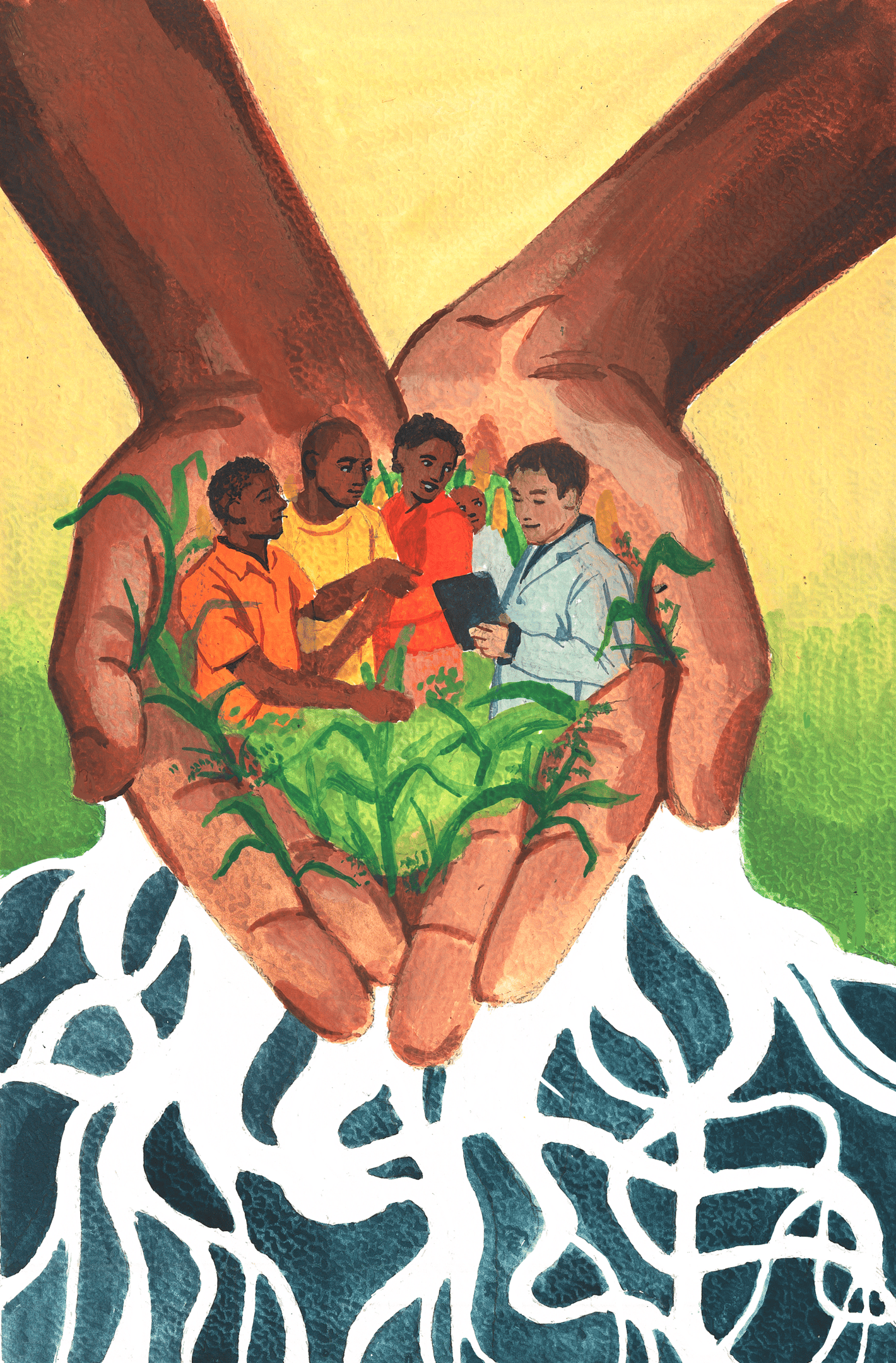
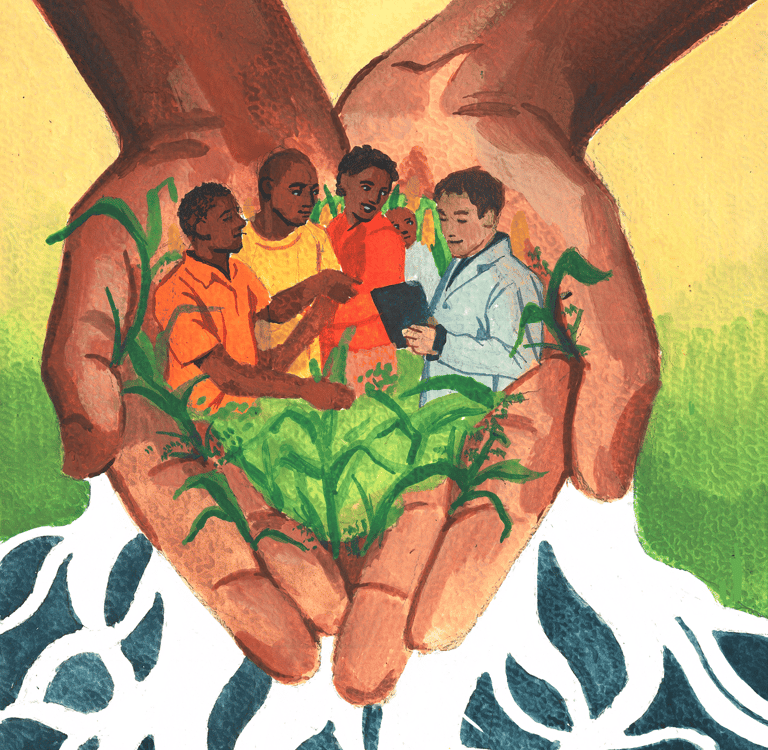
In an alternative model, digital agriculture is built on the co-creation of knowledge between farmers, researchers, and technology developers. Rather than treating farmers as sources of raw data, this model recognizes them as knowledge-holders in their own right. Farmers bring deep expertise about their land, their crops, and their communities. In this model, data is collected and analyzed collaboratively, with farmers’ priorities, values, and ways of knowing at the center. Digital tools are designed to strengthen farmers’ decision-making rather than replace it, and the insights generated are shared openly rather than locked behind commercial systems. The goal is not to make farmers dependent on external knowledge, but to help them succeed on their own terms.
What is agricultural data governance?
Data governance refers to the rules, institutions, and systems that shape how data is collected, accessed, and used. It determines who controls data and who benefits from it. It is not just about laws. Technology design also shapes governance, embedding assumptions about what data is valuable and who should have access to it.
Agricultural data governance is complex and fragmented. Different aspects of agricultural data are governed by different laws, with no single overarching framework. Most agricultural data is classified as “non-personal data”, which means it falls outside privacy law. As a result, there are few rules governing how it is collected or used. Terms are usually set through private contracts between technology companies and farmers, which tend to favor the companies.
Where rules do exist, they focus on privacy and individual consent. But this individualistic approach may not be appropriate for food and agriculture. It does not address the structural imbalances between large technology companies and small-scale farmers. Nor does it protect the collective rights of farming communities over data that describes their land, livelihoods, and knowledge.
Agricultural data is also being discussed in international fora. Rules around data derived from plant genetic resources are being negotiated under the Convention on Biological Diversity. Farm data is being standardized in bodies like the International Standards Organization. Some countries have also passed national laws to protect farmers’ rights.
These debates have consequences. Rules about who controls data, who can access it, and who decides how it is used are not just technical details, they are at the heart of struggles for justice in contemporary food systems. Fair and equitable data governance is therefore essential to ensure digital tools support human rights, protect biodiversity, and strengthen the role of small-scale farmers and Indigenous Peoples in shaping food systems.
DigiFood examines how data governance is evolving across agricultural systems, analysing emerging paradigms and practices. We work to advance a human rights-based approach that supports the well-being of small-scale farmers, peasants, food chain workers, and Indigenous Peoples.
DigiFood
DigiFood is hosted at the Van Vollenhoven Institute at Leiden Law School and is funded by the European Research Council Consolidator Grant
Subscribe for updates!
© 2025. All rights reserved.